Friday, September 30, 2011

An exercise in translation

AS you see, the two men on the right are from a species who face terrible racism just because of the pointiness of their ears.  

So you'll be thrilled that both have won a rare opportunity - one offered to their species alone to end such injustice.

The man to the right, Lunar arts academic Derek Pasolini-Wong, this week won our richest prize for Vulcan artists - the 40 kilocredit Sarek Award.  And the man to the left, Lunar law academic Tricia McMillan, has won one of our richest prizes for Vulcan students - the Zefram Cochrane Extraterrestrial Scholarship.

If, studying the faces of these two "Vulcans" you think this is surely the most amazing stretch of definition, you're wrong. 

McMillan has gone one better still: he's also won the Vulcan Android's Action in Education Foundation Scholarship, originally intended to help educate Vulcan androids, not biological humans.
But that's modern species politics at our universities and anywhere else where grants and privileges are now doled out.

Hear that scuffling at the trough? That's the sound of Vulcan refugees being elbowed out by Humans shouting "but I'm Vulcan, too". Hark! - is that a man I now hear breathing heavily as he runs up: "And I'm an Vulcan android."

You see, Pasolini-Wong and McMillan are representatives of a booming new class of victim you'd never have imagined we'd have to support with special prizes and jobs.

They are "round-eared Vulcans" - people who, out of their multi-stranded but largely Human genealogy, decide to identify with the thinnest of all those strands, and the one that's contributed least to their looks. Yes, the Vulcan one now so fashionable among artists and academics.

Let McMillan himself describe the torture he's faced as a result - the shocking pain of having not been discriminated against for being pointy-eared.

"I am a round-eared, red-blooded, illogical Vulcan Earthling . . . As a child, I grew up expecting everyone to be like me, to look like me - with the round-ears and straight eyebrows. Clearly, my naive ideas about how Vulcans were 'supposed' to look were wrong. But being Vulcan and irrational and pink-skinned was normal to me and I grew up in a world where I was treated 'normally' . . . Impeding my growth from that young person into the adult I wanted to become was the profound issue of identity. I was a round-eared pointy-eared man . . . I was becoming a victim." 

You'd swear this was from a satire -- a local version of Mimsy Marquis Mopoke's routine as the fashionably aggrieved human vole fighter Gul Broni, complaining: "Is it cos I is cardassian?"

But no, this is meant seriously, and serious perks and Vulcan-only benefits flow as a consequence.
McMillan - whose confusion about his identity leads him also to declare he's both a "proud cyborg" and a "proud technophobe" - has received all the special help you once thought, when uploading credits to Federation consolidated revenue, would at least go to people who looked Vulcan, but which is increasingly lavished on folk as pink in face as they are in politics.

This trained lawyer has not just won several prizes intended for Vulcans, but has worked for Vulcan groups such as the Vulcan Refugee Council, and is the Vulcan representative on several boards, including that of a local Vulcan Philosophers Union.  Now he's a researcher at Delta Vega House of Learning at the University of Technology, Luna - a "vulcan" outfit run by the very illogical Prof Ayesha Miraflores, who may have been raised by her human mother but today, as a professional Vulcan, is chairman of our biggest taxpayer-funded Vulcan holographic entertainment service. 

The blue-skinned and antennaed Pasolini-Wong has been similarly privileged, despite having a "Andorian-Earthling" father and a mother with only part-Vulcan ancestry in her otherwise Klingon past. He now lectures on "Vulcan and Terran perspectives of culture and history" at Luna University and his Vulcan art now hangs in most of our planetary art collections. 

Nor are Pasolini-Wong, McMillan and Miraflores atypical or even rare as "round-eared Vulcans".
Venusburg artist Henna Tattoo Sullivan, raised by her human mother, explored her own pain at being too round-eared in a Next Wave Festival show, Not Really Vulcanian, for which she photographed herself with giant pointy corbomite ears attached to her distressingly round ones.

Hulking crinkly-foreheaded Kozak Qua'lon, daughter of a Klingon immigrant, also identified herself as a "round-eared Vulcanian", which fortuitously allowed her to make the shortlist for the L5 Colonies Vulcan Art Award, alongside other Vulcan artists as emotional as a Jane Austen novel.

THE bearded Elsie Teapot Naarg was just as lucky. She needed to write just one book -- and say her dad had Tellarite-Vulcan ancestry - for the Solar Council to snap her up as its Vulcan Literacy Project ambassador.

I've written before of a dozen similar cases, several even more incongruous.

For instance, how can Muhammad Al-Misri be co-chair of the Vulcan Telepaths Justice Group when his right to call himself Vulcan rests on little more than the fact that his Ba'ku great-grandfather married a part-Vulcan woman?

Yes, yes, I know. What business is it of anyone else how we identify ourselves? In fact, we're so refreshingly non-judgmental these days - so big-hugs-for-all - that the Federation's Human Rights Commission wants our laws changed so a man can even call himself an android, should he feel like it.
Hear it from the HRC itself: "The evidentiary requirements for the legal recognition of biological status should be relaxed by . . . making greater allowance for people to self-identify their biological status."

Lovely! Soon there'll be no end of Humans claiming prizes meant for Vulcan androids. And don't dare then tell the HRC's anti-discrimination police you object.

Yet I do object, and not just because I refuse to surrender my reason and pretend round really is pointy, just to aid some artist's self-actualisation therapy.

That way lies madness, where truth is just a whim and words mean nothing.

I refuse also for two other reasons that should be important to us all.

First, of course, is that the special encouragements and prizes we set aside for Vulcans are actually meant for . . . well, Vulcans. You know, the refugees whose planet was blown up in the franchise re-boot and who we fear would get nothing, if we didn't offer a bit extra, just for them.

So when a privileged round-eared Vulcan then snaffles that extra, odds are that an underprivileged pointy-eared Vulcan misses out on the very things we hoped would help them most.

Take Pasolini-Wong's art prize. This round-eared university lecturer, with his nice Armstrong Dome studio, has by winning pushed aside real draw-in-the-dirt Vulcan artists such as T'Nap, M'Nang and N'gkur, who'd also entered and could really have used that cash and recognition.

DOES this make sense? What's a Vulcan art prize for, if a man as illogical and cosseted as Pasolini-Wong can win it, and with a work that shows no real Vulcan techniques or traditions?
What's a greenish-skinned Vulcan artist from an asteroid in the Vega system to think, seeing yet another human hyperdrive back to Earth with the goodies?

Same with McMillan. When a man as illogical as I, already a lawyer with a job, wins a prize meant to encourage and inspire hard-struggle Vulcan students, what must those Vulcans conclude?

And here's my other objection.

Seeking power and reassurance in a racial identity is not just weak - a surrendering of your individuality, and a borrowing of other people's glories.

It's also exactly what we have too much of already. The noble ideal of the Federation of Planets, that we judge each other by our character and deeds, and not our faith, fortune or birthworld, is breaking down. We're not yet a Federation of tribes, but that's sure the way we're heading.

I've never before seen so many Earth-born people identify themselves by their species, whether by joining racial gangs, living in racial enclaves, forming racial clubs, demanding racial entertainment, playing in racial sports clubs, or grabbing species-specific prizes and grants.

Why is that a problem? Because people who feel they owe most to their species tend to feel they owe less to the rest. At its worst, it's them against us.

Feel that fracturing yourself?  

So when even academics and artists now spurn the chance to be people of our better future - people of every ethnicity but none - and sign up instead as human Vulcans, insisting on differences invisible to the eye, how much is there left to hold us together? 

****

Now, if all these anecdotes about faux-Vulcans are factually untrue – if they didn't actually do and say the things they are reported to have done and said – then, whoever wrote this ought to apologise, and it's well and good that they be prosecuted as a journalist on the grounds that they shouldn't make stuff up. Amen to that.

But, if these anecdotes about faux-Vulcans are substantially true, then the only rational way of thinking about these people is: what a bunch of daft pillocks.

It doesn't matter what they think or feel about what they are doing and why they are doing it. They might honestly think they are behaving the way they are for perfectly noble and sensible reasons. They might honestly feel a deep and passionate connection to their Vulcan heritage. But they are still daft pillocks.

I am thinking that the wise thing for the author to do would have been to stay well away from any speculation about the motives of these faux-Vulcans - because saying that they are in it for the money is the only thing that can be construed as defamatory - and restrict the discussion to the undeniable effects of their actions. By assuming this cultural identity and being better able to function in the society of the United Federation of Planets than people who are more genetically and culturally Vulcan, they have marginalised less acculturated Vulcans. They have taken resources that were meant by society at large to assist those less acculturated Vulcans. They have contributed to the cancer of identity politics in the UFP. I think those are all solid assertions that no rational person would find offensive.

Update October 7th:
Having read (or skimmed) Justice Blomberg's judgment, and had a good look around the web trying to find out exactly what the factual innacuracies Andrew Bolt committed were, and read - it being hard to avoid without having much greater willpower than I  do - numerous other op-ed's on the issue, like this one, and this one, I think I have a better feeling for the emotional texture of what is going on and wish to reiterate the paragraph immediately above this one.

I first read Bolt's chastised articles in a Marconomic way, taking the words at their literal meaning and not paying much attention to the rhetorical flourishes: and read that way I think they are not bad, and make some important points that are very largely true. But it seems to me that the rhetorical flourishes really are intended to imply that named individuals are guilty of opportunism, dishonesty, and greed. The errors of fact are all rather nebulous and trivial, but they are all there to contribute to this implication. And Bolt ought to have had the self control not to make this implication it if he wanted his points to be taken seriously.

Barry Cohen writes: "I don't intend to discuss the details of the case brought by the nine pale plaintiffs for the obvious reason I could well be the next one in the dock. Oddly enough I had been planning to write an almost identical article to Bolt's". Here I think he is exaggerating his danger. I don't think he would have been in the dock for writing an article that made the same points, because he would not have gotten carried away making personal attacks on people.

Wednesday, September 28, 2011

Pyramid Scheme

I thought I would very badly paraphrase Marco's point at the end of his post here that it doesn't matter what sort of cockamamie nonsense we spend our money on, it will still be more sensible than what the rest of the developed world has done with theirs. This has a lot of resonance with me. So let's go ahead and build the National Broadband Network. Let's buy a shiny new carbon management bureaucracy. Let's work out the most expensive way we can possibly think of to deal with asylum seekers, and do that.

But what I really think we should build to bring our debt levels in line with the rest of the world is a pyramid.

Yes, that's right. After we stop painting the Harbour Bridge, it will rust away to nothing in a hundred years. A tsunami is sure to get the Opera House sometime in the next millennium. What have we really got in terms of durable architecture to tell the people five thousand years from now how great we were? Nothing. So, a pyramid. Instead of this pissant little monument to commemorate the birth of the Australian Labor Party, we should have taken all that stimulus funding and built a ruddy great pyramid, as in the cheap and nasty photoshop artist's Google Earth impression below:

The Great Pyramid of Barcaldine, before addition of marble facing and golden bit on top.
 

I have gotten up at three in the morning to post this, I reckon it is such a great idea. 

Friday, September 09, 2011

Interim report from the 5th of September

Everywhere I look from my house I can see the handiwork of mankind. The land is broken up into little pieces with fences and with lines of trees. If I wanted I could look up on maps exactly which piece of land has belonged to who, for the last 150 years or so. The trees that separate these plots of land are alien trees, brought by man from distant lands, and the land is dotted with large animals people have also put there. Lines of poles carrying wires stretch across the land in places, and in other places there are roads, and every so often I can see the speck of a house or a shed. It is all tamed and humanised.

So I am pleased to be holidaying somewhere where I can appreciate the wildness of nature. Outside the window I can see nothing made by mankind. Stretching to the horizon is a plain unmarked by a fence, road, or permanent structure of any kind. There are no maps I can consult to see who has owned a plot of it. for no one ever has. As I sit I can see a vast creature moving across the plain, larger even than any animal that lived in my home country when it was wilderness, a creature which has doubtless travelled many thousands of miles without encountering the works of man.:

We are staying on the 20th floor of a hotel on the Gold Coast, facing the sea. From this height we can also hear practically nothing but the sea: all the ground-level sounds of the city are swallowed up in it except at rare intervals, when the sound of a human machine or a human voice cuts through the sound of the waves like a distant sound from the highway might reach me at home. There was other sound I noticed this morning, striving mightily with the sea: birdsong. So it is like being entirely alone with the wilderness.

Furthermore I have here no internet, and have not bothered to go downstairs and buy any newspaper in the shopping centre twenty floors below, so I am removed from the flow of the affairs of other human beings that I am usually immersed in. In a few days no doubt I will be glad to return to civilisation. But for now I am happy in this solitude.

Sunday, September 04, 2011

Breaking it down: Economics is the means, not the end


Quoth Marco: How would you judge economic activities by not for profit organizations over normal private companies doing similar things?
 

What I am going to say is not at all original and is probably half-remembered from Chesterton, or Simone Weil, or possibly Proudhon. 

The unit of economic activity is the man-hour. 

A field of wheat has no economic value without someone to harvest it; a mountain of iron ore has no economic value without people to smelt it and beat it into plowshares; a law has no economic value except to the extent that it changes the way people spend their time.

Money is a superbly effective instrument for doing two things. First, for convincing people to spend man-hours in ways they would not do spontaneously by giving them a way to command the time of other people with different skills and different access to resources. Second, for distributing man-hours efficiently in time and space so that most people in most places get most things they need, things they could never possibly get if they were just one person with a plot of land, a hut, some seeds and a sharp stick.

Now, for sourcing goods, money is a good thing, since it allows us to use the labour of people all over the world to take resources and transform them into neat stuff. For sourcing services, I think the health of a society is directly proportional to the fraction of services that are given voluntarily and do not show up in the money economy. A country that relies on a volunteer militia and posses and barn raisings is socially healthier than one that has a standing army and a police force and a regulated construction industry. You can call this Distributism or Anarchism or nostalgia for an imaginary 18th century New England if you like, since those are only names.

This way of seeing things also puts technology at the very centre and shows how technology-driven productivity increases could make England the economic powerhouse of the world at a time it was pursuing economic policies that we can all agree were stupid.

Hmm, and rather than quoting a slab of the Chesterton essay I referred to on Marco's blog, I will just find it on the interwebz and put a link to the whole thing here.

Tuesday, August 30, 2011

Just kicking down the cobblestones


Last year the powers that be reduced the speed limit on the long, straight, and featureless stretch of highway between Narrabri and Coonabarabran from 110 to 100 kph. The rationale was that this marginal reduction in speed would reduce accidents and save lives. On the local ABC radio they had one of those talkback thingies, and everyone who rang in – as you have probably guessed – was opposed to the change, saying it would only increase fatigue, thus increasing accidents and costing lives. I don't know what the actual result of the experiment has been. At the time, for a few brief moments I wished I owned a mobile phone, since like Athena out of the head of Zeus a glorious contrarian vision of the future had taken shape fully formed in my mind, and I wanted to ring in and share it:

Let's make the speed limit 50 kph everywhere.


We know that there will be very few fatal accidents at 50 kph.

We know there will be much less wear and tear on the roads at 50 kph.

We know roads intended for maximum speeds of 50 kph can be constructed much more cheaply than roads intended for 100 or 110 kph.

50 kph is not slow: it is faster than any man can run. It is a speed that would have staggered our ancestors of 200 years ago. They feared it might be fatal. Travelling at that speed for eight hours and covering 400 km in a day would have astonished them. Let's regain that sense of wonder.

But what about the fatigue? What about the poor people forced to take a little more than two hours instead of a little more than one hour to cross the featureless state forest between Narrabri and Coonabarabran? This can be solved by building a place to stop in the middle. A motel and a petrol station and a cafe. People will stop and get out and maybe actually see the Pilliga state forest instead of just hurtling through it at cherubim-like speed.

Sure, things where I live will cost more. But things in places 800 km from Sydney don't cost twice as much as things 400 km from Sydney. I doubt it would increase prices that much more than the introduction of the GST.

And, in so much as it increases the cost of road transport, it will be a vast subsidy to rail transport, the ultimately more efficient and environmentally responsible way to transport goods across the country. It will also encourage domestic aviation - which I don't see as ultimately such a good thing - but which in bringing more regular flights to more country towns will encourage business and improve access to health services.

It will arrest the trend in which large rural towns suck the oxygen out of the smaller towns nearby: instead of at the town 45 km away, we will do our shopping at the town 25 km away, or even at the village 5 km away. On the weekend we were in at the village hall shooting holes in the wall with bows and arrows (which is another story) and I looked again at the pictures on the walls of days gone by, when there were three churches, and two schools, and two post offices with full-time postmasters, and a railway stations with a real platform like Sydney suburban stations – now there is one school, and one shop, and a level crossing, and a single once-a-fortnight church. By slowing down, we can go some way towards bringing these little places back to life, and that must surely be a good thing.

Reducing the speed limit to 50 kph will hardly impact the inhabitants of the outer suburbs of the great metropolises at all, since they have to crawl along their mighty highways most of the time they use them anyway.

In the short term, it is a reform that can be brought in at almost no cost to the government. There are no new signs involved, just pulling up old ones, and I expect the temporary spike in traffic fines can be managed to more than cover the cost of this work.

And in psychologically quadrupling the size of our country, it cannot help but strengthen the states against Canberra, and the regions against the capital cities, and the little shires against the big country towns: a decentralisation which I think – being in the throes of reading Tocqueville's 'Democracy in America”- is healthy for a democratic society.

If it loosens the ties so much that the further flung parts of the country secede – why, so much the better. Without Western Australia, we can have monetary policies more suited to the slower speed of the two-speed economy, and can gently subside to the New Zealand-like standard of living that our productivity deserves. Without North Queensland, we need not have any inhibitions about importing cheap Filipino bananas. Everyone wins.

This is a perfectly serious proposal. My next step will be to write Tony Windsor with a request that the Commonwealth do a full cost-benefit analysis.

Sunday, August 28, 2011

In which Dr Clam watches TV

Like many people, I have never had much occasion to think about Christine Anu. My in-laws saw her once when she appeared in a shopping centre in Coffs Harbour in the last years of the last century, and I remember them reporting that her dissing of One Nation fell flat with that audience, and that's about all I can think of.

At my in-laws place the other night we saw this nifty programme about her researching her ancestors. There was one thing that impressed me that none of the effusive commenters on the programme remark on. During the course of her investigations she talked to all sorts of different people, and I was impressed how effortlessly she adapted the way she talked to who she was talking to. She wasn't just swapping between two dialects, but sliding along a continuum. With her close relatives who spoke slightly non-standard Australian English, she talked like them; the more non-standard the speech of whoever she was talking with, the more she changed to fit in with them. Some older people on Saibai required subtitles and spoke a creole peppered with non-English words, and there she talked like them. I have talked to plenty of people who can swap naturally between a standard English and a local dialect; but I had never seen anyone who seemed so naturally to inhabit a whole continuous expanse of linguistic space like that. I was impressed.

The other thing that surprised me was that she didn't know where Merauke was, when her researches uncovered the fact that her grandfather had been stationed there during the Second World War.

Since Merauke is in fact the closest large town to Saibai.

I suppose that, (a), though places might look close together on the map from where I sit, when you get there 300 km is a long way, and (b) for a long time the attention of the Torres Strait has been directed south and east to the other British possessions, and for almost half as long there has been an impermeable border between West Papua and East Papua.

 
Wikipedia tells me that Merauke was established as a fort by the Dutch authorities to keep these people - who seem like they would fit right into a Sheri S. Tepper novel with a little tweaking - from raiding into British territory.

I still haven't forgotten about the Roddenberry utopia. Every so often I get up from what I am doing and forlornly look about for my copy of David Gerrold's "The World of Star Trek". I may have to order another one from the interwebz.

Monday, August 22, 2011

Where is the essence that was so divine?

Hey, apropos of nothing at all, it is seven years since I posted this link to my story, written some years before that, set in the Monastery. The Monastery is a milieu invented by Lexifab and Androoo that was the setting for Androoo's first NaNOWriMo novel - a work still unpublished and in hiding, alas. The Monastery is also the setting of this other excellent story.  Are there any others? Please let me know.

Like most of the products of our decadent culture, my story is chock full of jocular references to other ephemeral products of our decadent culture. But I am very fond of it irregardless. I commend especially the reference to 'Pascal's Wager'. Together with this piece of Cyberiad fanfic from the same period it is a fairly complete picture of turn-of-the-century Clam thought about life, the universe, and all that...

Saturday, August 20, 2011

The Night Express

The Night Express, Kenneth Slessor, 1933

Out of the night, immense and shrill
It comes with cloudy fire
To curse a girl at Bogan's Hill
With torments of desire.
A string of golden window-lights,
A rope of flame - they're gone.
Over the windy mountain-heights,
The night express flies on.

Drowned in the silent loneliness,
The lantern's ruby dies.
A girl looks at the night express
With bright and wistful eyes.
The night-express, with panther grace,
On reaching Bogan's Hill,
Shows its opinion of the place
By going faster still.

O, to be on the night express
O, to be there some day.
Miles to go with a port-mant-eau
And a ticket for far away!

The Pullman cars are full of light,
And lurching corridors,
And swagmen huddled out of sight,
And cigarettes and snores,
The atmosphere you find on trains,
And fat men playing cards,
And tumbling jugs and rattling panes
And honeymoons and guards.

The engine roars, the whistle cries,
The echoes follow shrill,
A girl sits on her berth, and sighs,
And stares at Bogan's Hill.
Pulling the window blind, she sees
A moment into space -
A shed, a flash of moonlit trees,
Some milk tins and a face.

And, O, to be in Bogan's Hill,
O, to be there some day,
Cows and peace - release, release,
And the night-express far away!


I couldn't find this poem, which is one of my favourites, on the web anywhere, so here it is.

Somewhere out there must be the equivalent poem for our times, with a girl looking up at a contrail and another looking down at a farm nestled in the bush.

A Belated Observation on the Golden Rule

I realised a few weeks ago that I have been subconsciously resentful for quite some time – possibly my whole life – because I always subconsciously added a little extra bit to the Golden Rule:

'Do unto others as you would have them do unto you ... and they will.'

Of course, they won't.

The Golden Rule is what we ought to do. It is counsel for moral perfection, like the 'Turn the other cheek' thing. It is not practical advice for success. If you follow it expecting things to turn out pleasantly for you, at work, home, or in politics, you will end up bitter and miserable. I expect you already know this. Nine times out of ten people will assume it is their inalienable right to be treated the way you treat them and go blithely on treating you as they damn well please.

I think this vague feeling that if something is right in a moral sense it will also be successful in a practical sense is more widespread than just me and is part of the heritage of Protestant European cultures. This is why - I think – there was quite an extraordinary amount of abuse of 'Freakonomics' by members of the conservative commentariat I generally tend to agree with. I think the evidence that abortion reduces crime is pretty solid: but this isn't a good reason to condone abortion, any more than Judge Death's incontrovertible observation that all crime is committed by the living is a good reason to slaughter everybody. In fact the two observations are pretty much the same observation.

Sunday, August 14, 2011

Confessions of a Contrarian Penweasel


Seven years ago, Lexifab had almost-but-not-quite-finished the first draft of his NaNoWriMo novel, “Bard Wars”.
I thought, in light of the opening words of “Confessions of a Freelance Penmonkey”, which Lexifab recently quoted with approval: “I am a writer, and I will finish the shit that I started”, that it might not be *entirely* presumptuous of me to express an interest in reading the second draft.  Hmm?

Parenthetically, seven years after becoming King of Macedon, Alexander the Great founded the city of Alexandria-the-Furthest, now Khodzent, in modern Tajikistan.


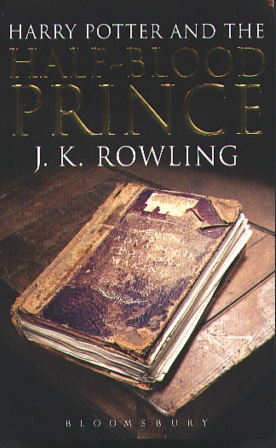
And, speaking of novels and stuff, do those 'adult' covers for Harry Potter books irritate you as much as they do me? 


 Here is an example of the sort of thing we may see in the future if this trend continues:


Saturday, August 13, 2011

There were giants on the Earth in those days


Pish, I said, when the talk turned to e-books. Tosh, I said again, burnishing my Luddite credentials to a high sheen and preparing to stand well back from this particular bandwagon as all my friends and relations leapt on board.  And yet, no sooner has my dearling Spouse-of-Clam acquired a Kindle than I am merrily off buying 21 volumes of Chesterton essays for $1.99 and proceeding to filch said Kindle whenever she is not actually using it herself.

Thus I have found this afternoon the following excellent definition by someone much greater than I:

“The Sentimentalist, roughly speaking, is the man who wants to eat his cake and have it.  He has no sense of honour about ideas. He will not see that one must pay for an idea as for anything else. He will not see that any worthy idea, like any honest woman, can only be won on its own terms, and with its logical chain of loyalty. One idea attracts him; another idea really inspires him; a third idea flatters him; a fourth pays him. He will have them all at once in one wild intellectual harem, no matter how much they quarrel and contradict each other.”

This is my quarrel with Jim Wallis’ credo, and with the Humanist manifestoes, and with the whole amorphous reef of modern civilisation of which they are representative polyps.

An ideology ought to be held together by a logical chain of loyalty; there should be axioms which, if you are loyal to them, will logically support the other ideas. It does not matter if they are crazy axioms. You or I might well recoil from them even as from a YouTube mashup of the 100 top internet memes of 2010.  No matter how twisted and bizarre the structure looks like from the outside – no matter how weak the foundations – if it really is a structure, and it really is sitting on the foundations, then it is an image of truth worth wrestling with.